---
title: "Sand, Rain, Wood"
description: "3 ‘Coastal Spondaic’ poems on walking: over sand, rain, and wood; under tide, forest, and rot."
thumbnail: /doc/ai/nn/diffusion/imagen/2026-02-18-gwern-nanobananapro-yugen-aweatheredyellowbenchinapacificnorthwestforest.jpg
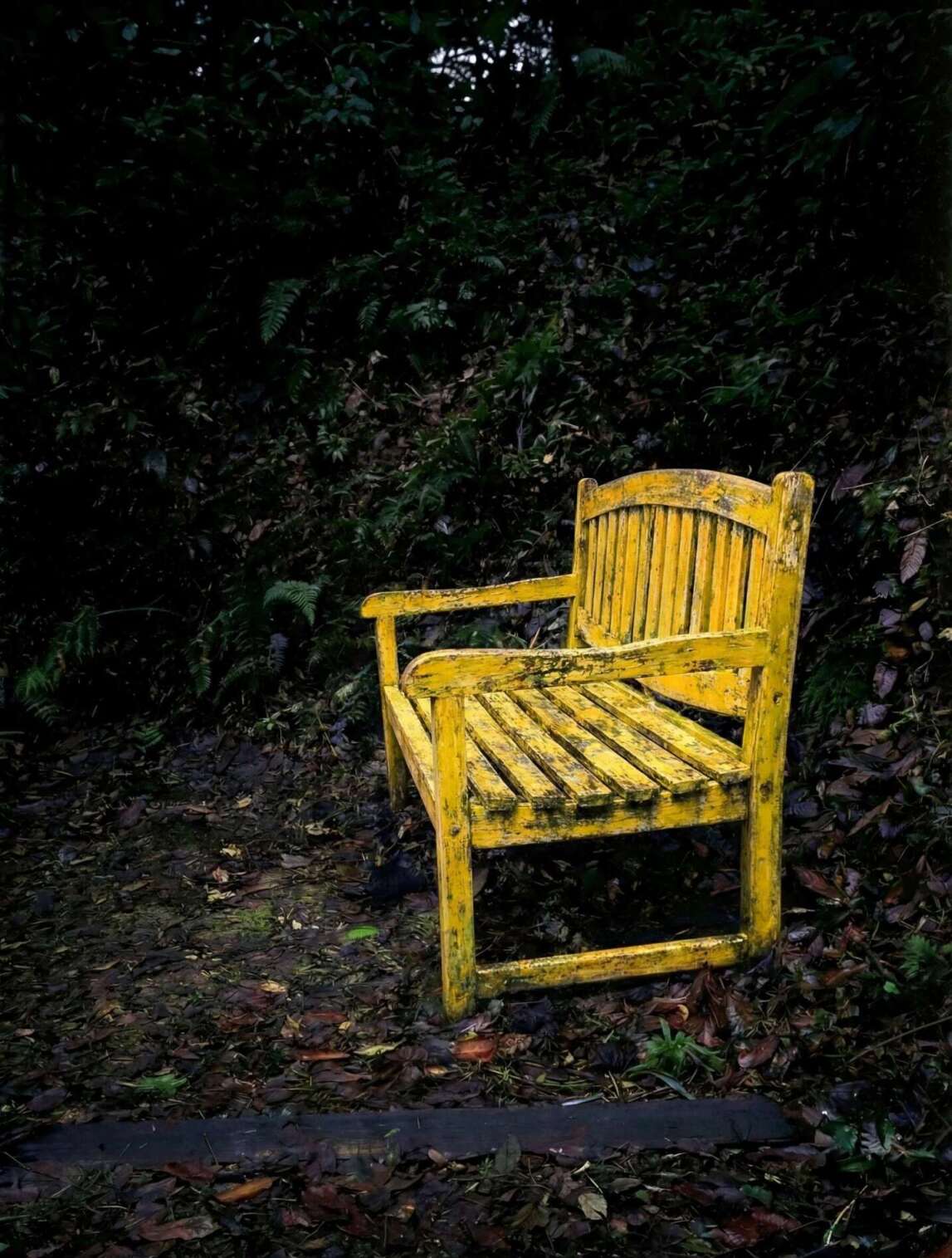
thumbnail-text: "Rotting yellow bench in a Pacific Coastal forest in the rain, deep in a trail. The luminous yellow paint is flaking and peeling away, as it pops out against the background (slightly reminiscent of Miyazaki), in a spirit of <em>wabi-sabi</em> and <em>yugen</em>. Google Nano Banana Pro edit of an original photograph taken at 1440 Multiversity, Scotts valley, California, in February 2026 by Gwern Branwen."
thumbnail-css: invert-not
author: Gemini-3.1-pro-preview, GPT-5.2 Pro, GPT-5.5 Pro, Claude-4.8-opus, Claude-5-Fable, Kimi K2.6 Thinking, Gwern
created: 2026-02-18
modified: 2026-06-12
status: finished
confidence: fiction
importance: 3
css-extension: "dropcaps-not reader-mode toc-not index dark-mode"
...

# Rialto Beach, February
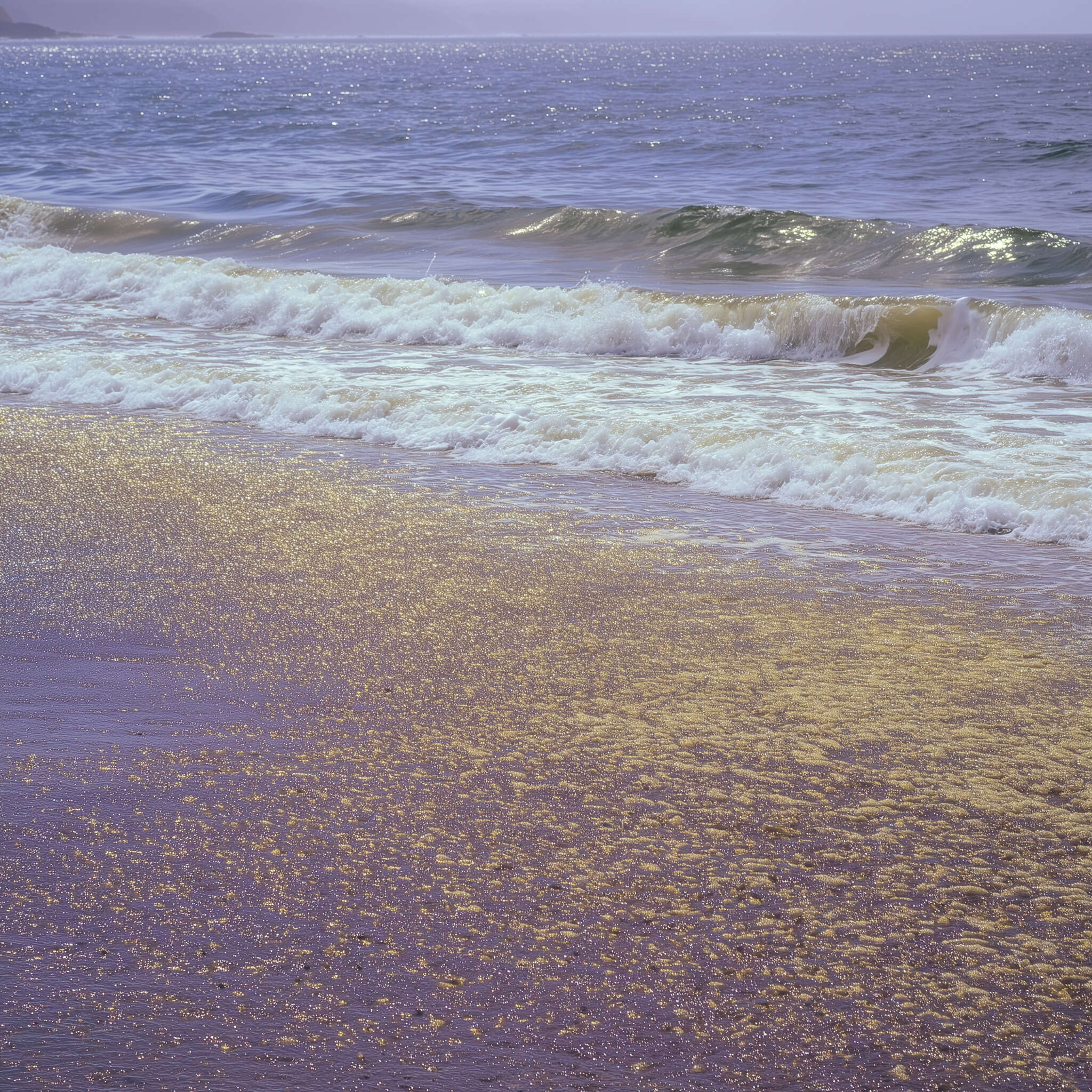
![](/doc/ai/nn/diffusion/midjourney/landscape/2026-06-12-gwern-midjourneyv8-suminoebeach-yellowspeckledsand.jpg){.float-right}

<!-- SUMMARY: "Rialto Beach, February". Tideline walk. The Coastal Spondaics form starts at its eponymous coast. The killer feature: the swell/drop mechanics become literal—wave sets build and collapse, so the peak sequence itself can perform tide dynamics, a structural argument neither prior poem could make. Sensorium inverts the demo completely: open and horizontal versus enclosed and vertical, roar versus hush; cognition destroyed by saturation (white noise) rather than suffocation; the agent erases rather than buries. -->
<!-- FORM
     Meter: Coastal Spondaics. Accentual strong-stress, +1 stress per line.
     Rhyme: None.
     Constraints: Continuous column. Swells escalate +1 from base of 2;
     mandatory trisyllabic dactylic pivot terminates each swell via enjambment.
     No two adjacent swells peak at the same count. Density floor ≤1 unstressed
     syllable between stresses; edge caps ≤1; trisyllables reserved for pivots;
     non-pivot disyllables trochaic (shingle, headlands). Alliteration
     (cross-word, consonantal on 4+) on all 3+ stress lines. No full stop on
     swell-final lines; em-dash at peaks ≥5 only. First swell peaks at 4.
     Final pivot resolves into a 2-stress coda.
     Pivots: 8 verbal, 1 adjectival (↓8). No pivot overlap with prior poems.
     Peak sequence: 4, 3, 5, 3, 6, 3, 7, 4, 3—all adjacent pairs distinct.
     Crest envelope: 4→5→6→7 through 3-stress troughs, receding 4→3:
     the peak sequence performs wave-set mechanics and tide-turn.
-->

<!-- ARGUMENT ARC
     S1 (peak 4): Arrival. Through the dune gap; the roar precedes the sea.
     S2 (peak 3): Trough. Wind as pressure between sets.
     S3 (peak 5): First set. Wave anatomy: stack, fold, spray.
     S4 (peak 3): Trough. Backwash raking the shingle.
     S5 (peak 6): The grind. Geological abrasion, shingle to headlands;
         the pivot collapses scale from headlands to boot-prints in one word.
     S6 (peak 3): Erasure. The walker's only trace deleted in real time.
     S7 (peak 7): The seventh wave. Sound-saturation accumulation:
         ear → skull → thought → name. Where the demo's cold penetrated
         bone → nerve → thought, the roar goes one stratum deeper—identity—
         justifying the form's first 7-stress line.
     S8 (peak 4): Ebb. The sea withdraws; the one adjectival pivot opens
         onto the emptied flats.
     S9 (peak 3): Recession. Dusk drains with the tide.
     Coda: Tide-wrack—the deposit line, all the sea leaves behind.
     (The three codas collectively reduce the walk to deposits: *tide-wrack*, *drip-stone*, *leaf-mould*.)
-->

<!-- SCANSION KEY
     Format per line: SN. K: STRESS STRESS ... [alliterating sound: words]
     CAPS = counted stress (ictus). Caps = compound secondary. lower = unstressed.
     Hyphen = compound boundary (both count; head CAPS, tail Caps).
     Middle dot (·) = syllable boundary in disyllables and pivots.
     Swells labeled S1–S9. Pivots labeled ↓N with type.
-->

<div class="poem">
Dune gap. <!-- S1. 2: DUNE GAP --> \
Bent grass bows, <!-- S1. 3: BENT GRASS BOWS [b: bent/bows] --> \
surf sound swells from west, <!-- S1. 4: SURF SOUND SWELLS from WEST [s: surf/sound/swells] --> \
Deafening <!-- ↓1. DEAF·en·ing [verbal] --> \
both ears. <!-- S2. 2: BOTH EARS --> \
Wind walls in, <!-- S2. 3: WIND WALLS IN [w: wind/walls; "in" stressed as phrasal particle] --> \
Buffeting <!-- ↓2. BUF·fet·ing [verbal] --> \
ribs, cheek. <!-- S3. 2: RIBS CHEEK --> \
Swells stack steep, <!-- S3. 3: SWELLS STACK STEEP [s: swells/stack/steep] --> \
wave face folds to foam, <!-- S3. 4: WAVE FACE FOLDS to FOAM [f: face/folds/foam] --> \
salt spray stings bare skin—<!-- S3. 5: SALT SPRAY STINGS BARE SKIN [s: salt/spray/stings] --> \
Peppering <!-- ↓3. PEP·per·ing [verbal] --> \
lip, lid. <!-- S4. 2: LIP LID --> \
Froth falls back, <!-- S4. 3: FROTH FALLS BACK [f: froth/falls] --> \
Harrowing <!-- ↓4. HAR·row·ing [verbal] --> \
loose stones. <!-- S5. 2: LOOSE STONES --> \
Shingle shifts, clacks, <!-- S5. 3: SHIN·gle SHIFTS CLACKS [sh: shingle/shifts] --> \
round rocks roll and grind, <!-- S5. 4: ROUND ROCKS ROLL and GRIND [r: round/rocks/roll] --> \
tide teeth gnaw stack, cave, <!-- S5. 5: TIDE TEETH GNAW STACK CAVE [t: tide/teeth] --> \
waves wear whole headlands down to sand—<!-- S5. 6: WAVES WEAR WHOLE HEAD·lands DOWN to SAND [w: waves/wear/whole] --> \
Leveling <!-- ↓5. LEV·el·ing [verbal] --> \
boot-prints. <!-- S6. 2: BOOT-Prints --> \
Each print brims, blurs, <!-- S6. 3: each PRINT BRIMS BLURS [b: brims/blurs] --> \
Vanishing <!-- ↓6. VAN·ish·ing [verbal] --> \
mid-stride. <!-- S7. 2: MID-Stride --> \
Roar rolls in, <!-- S7. 3: ROAR ROLLS IN [r: roar/rolls] --> \
roar rolls in through ear, <!-- S7. 4: ROAR ROLLS IN through EAR [r: roar/rolls] --> \
roar rolls in through ear, skull, <!-- S7. 5: ROAR ROLLS IN through EAR SKULL [r: roar/rolls] --> \
roar rolls in through ear, skull, thought, <!-- S7. 6: ROAR ROLLS IN through EAR SKULL THOUGHT [r: roar/rolls] --> \
roar rolls in through ear, skull, thought, name—<!-- S7. 7: ROAR ROLLS IN through EAR SKULL THOUGHT NAME [r: roar/rolls] --> \
Hollowing <!-- ↓7. HOL·low·ing [verbal] --> \
chest, gut. <!-- S8. 2: CHEST GUT --> \
Tide turns out, <!-- S8. 3: TIDE TURNS OUT [t: tide/turns] --> \
sea slides off slick flats, <!-- S8. 4: SEA SLIDES off SLICK FLATS [s: sea/slides/slick] --> \
Limitless <!-- ↓8. LIM·it·less [adjectival] --> \
grey glass. <!-- S9. 2: GREY GLASS --> \
Dusk drains down, <!-- S9. 3: DUSK DRAINS DOWN [d: dusk/drains/down] --> \
Silvering <!-- ↓9. SIL·ver·ing [verbal] --> \
tide-wrack. <!-- Coda. 2: TIDE-Wrack --> \
</div>

# Stone, Fern, Bone

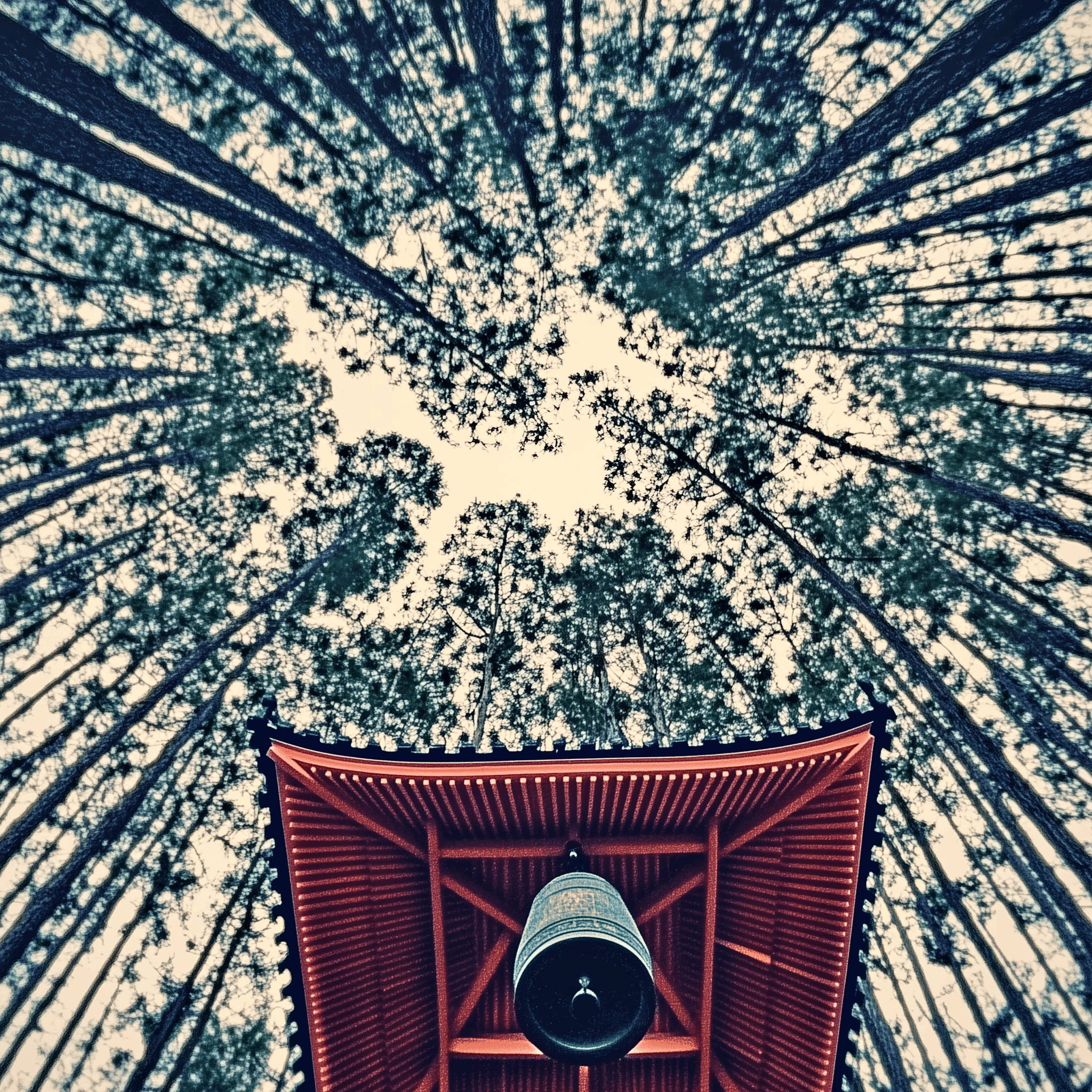
![](/doc/ai/nn/diffusion/midjourney/2025-03-21-gwern-midjourneyv6-thevoiceofthemountaintemplebell.png){.float-right}

<!-- FORM
     Meter: Coastal Spondaics. Accentual strong-stress, +1 stress per line.
     Rhyme: None.
     Constraints: Continuous column (no stanza breaks). Swells escalate by +1
     stress per line from base of 2. Mandatory dactylic pivot (trisyllabic,
     STRONG-weak-weak) terminates each swell via enjambment. No two adjacent
     swells may peak at the same stress count. Density floor: ≤1 unstressed
     syllable between consecutive stresses in non-pivot lines; pivots exempt.
     Edge caps: ≤1 unstressed syllable before first stress or after last stress.
     Trisyllables reserved for pivots only. Disyllables must be trochaic (initial-stress).
     Alliteration required (2–3 alliterating stresses) on lines of 3+ stresses;
     at least one cross-word pair; consonantal required on 4+ stress lines.
     No full stop on swell-final lines. Em-dashes at peaks ≥5 only.
     First swell peaks at 5 to establish escalation norm.
     Final pivot resolves into a 2-stress coda.
-->

<!-- ARGUMENT ARC
     S1 (peak 5): Approach. Trail, stairs, fern, mist—visual/spatial.
         Each line is a new image. Establishes the +1 norm across 4 spondaic lines.
     S2 (peak 3): Rain. Kinetic hit, truncated—rain arrives fast, doesn't build.
     S3 (peak 4): Descent. Physical impact on the body—planks, joints, force.
     S4 (peak 3): Smell. Truncated—olfactory assault is acute, not gradual.
     S5 (peak 5): Trunk scale. Trunks, bark, light—the forest closes over.
         All fresh content, no accumulation.
     S6 (peak 4): Canopy light. Diffuse pooling, then shafts through fog.
     S7 (peak 3): Sound. Truncated—one drip in newly lightless space.
     S8 (peak 6): Cognitive collapse. Cold as thermodynamic agent, penetrating
         progressive layers: bone → nerve → thought. Climactic accumulation swell.
     S9 (peak 5): The forest persists. Roots, creek, bark—geological time.
         All fresh content at 5 stresses. The environment endures after
         consciousness empties.
     S10 (peak 3): Stasis. Mist. The walk ends or the mind does.
     Coda: Mineral substrate. Drip-stone: rain and rock fused into one compound.
     Peak sequence: 5, 3, 4, 3, 5, 4, 3, 6, 5, 3.
     Adjacent pairs: (5,3)(3,4)(4,3)(3,5)(5,4)(4,3)(3,6)(6,5)(5,3)—all distinct.
-->

<!-- SCANSION KEY
     Format per line: SN. K: STRESS STRESS ... [alliterating sound: words]
     CAPS = counted stress (ictus). Caps = compound secondary. lower = unstressed.
     Hyphen = compound boundary (both count; head CAPS, tail Caps).
     Middle dot (·) = syllable boundary in disyllables (one count; eg. HEA·vy)
       and in pivots (syllable decomposition; eg. SCAT·ter·ing).
     Swells labeled S1–S10. Pivots labeled ↓N with type.
-->

<div class="poem">
Trail starts. <!-- S1. 2: TRAIL STARTS --> \
Stone stairs drop, <!-- S1. 3: STONE STAIRS DROP [s: stone/stairs] --> \
fern fronds brush each shin, <!-- S1. 4: FERN FRONDS BRUSH each SHIN [f: fern/fronds] --> \
mist coils through bark, branch, bough—<!-- S1. 5: MIST COILS through BARK BRANCH BOUGH [b: bark/branch/bough] --> \
Scattering <!-- ↓1. SCAT·ter·ing [verbal] --> \
drip, spray. <!-- S2. 2: DRIP SPRAY --> \
Rain runs cold, <!-- S2. 3: RAIN RUNS COLD [r: rain/runs] --> \
Battering <!-- ↓2. BAT·ter·ing [verbal] --> \
plank, root. <!-- S3. 2: PLANK ROOT --> \
Thick planks thud, <!-- S3. 3: THICK PLANKS THUD [th: thick/thud] --> \
knees jar, joints grind, <!-- S3. 4: KNEES JAR JOINTS GRIND [j: jar/joints] --> \
Shattering <!-- ↓3. SHAT·ter·ing [verbal] --> \
nerve, shin. <!-- S4. 2: NERVE SHIN --> \
Damp duff reeks, <!-- S4. 3: DAMP DUFF REEKS [d: damp/duff] --> \
Severing <!-- ↓4. SEV·er·ing [verbal] --> \
all sense. <!-- S5. 2: ALL SENSE --> \
Tall trunks loom, <!-- S5. 3: TALL TRUNKS LOOM [t: tall/trunks] --> \
red bark blocks sky, <!-- S5. 4: RED BARK BLOCKS SKY [b: bark/blocks] --> \
dim green-gloom dies slow—<!-- S5. 5: DIM GREEN-Gloom DIES SLOW [d: dim/dies; g: green/gloom (compound-internal, bonus)] --> \
Silencing <!-- ↓5. SI·lenc·ing [verbal] --> \
all breath. <!-- S6. 2: ALL BREATH --> \
Pale light pools, <!-- S6. 3: PALE LIGHT POOLS [p: pale/pools] --> \
thin shafts thread through fog, <!-- S6. 4: THIN SHAFTS THREAD through FOG [th: thin/thread] --> \
Fracturing <!-- ↓6. FRAC·tur·ing [verbal] --> \
all light. <!-- S7. 2: ALL LIGHT --> \
Drip sounds slow, <!-- S7. 3: DRIP SOUNDS SLOW [s: sounds/slow] --> \
Cavernous <!-- ↓7. CAV·ern·ous [adjectival] --> \
dark vault. <!-- S8. 2: DARK VAULT --> \
Cold creeps close, <!-- S8. 3: COLD CREEPS CLOSE [c: cold/creeps/close] --> \
cold creeps close through bone, <!-- S8. 4: COLD CREEPS CLOSE through BONE [c: cold/creeps/close] --> \
cold creeps close through bone, nerve, <!-- S8. 5: COLD CREEPS CLOSE through BONE NERVE [c: cold/creeps/close] --> \
cold creeps close through bone, nerve, thought—<!-- S8. 6: COLD CREEPS CLOSE through BONE NERVE THOUGHT [c: cold/creeps/close] --> \
Smothering <!-- ↓8. SMOTH·er·ing [verbal] --> \
all self. <!-- S9. 2: ALL SELF --> \
Roots run deep, <!-- S9. 3: ROOTS RUN DEEP [r: roots/run] --> \
cold creek carves through stone, <!-- S9. 4: COLD CREEK CARVES through STONE [c: cold/creek/carves] --> \
bright brown bark sheds rain—<!-- S9. 5: BRIGHT BROWN BARK SHEDS RAIN [b: bright/brown/bark] --> \
Weathering <!-- ↓9. WEATH·er·ing [verbal] --> \
hard years. <!-- S10. 2: HARD YEARS --> \
Mist moves slow, <!-- S10. 3: MIST MOVES SLOW [m: mist/moves] --> \
Bottomless <!-- ↓10. BOT·tom·less [adjectival] --> \
drip-stone. <!-- Coda. 2: DRIP-Stone --> \
</div>

# Yellow Bench, Wet Rail

![](/doc/ai/nn/diffusion/imagen/2026-02-18-gwern-nanobananapro-yugen-aweatheredyellowbenchinapacificnorthwestforest.jpg){.float-right}

<!-- FORM
     Meter: Coastal Spondaics. Accentual strong-stress, +1 stress per line.
     Rhyme: None.
     Constraints: Continuous column (no stanza breaks). Swells escalate by +1
     stress per line from base of 2. Mandatory dactylic pivot (trisyllabic,
     STRONG-weak-weak) terminates each swell via enjambment. No two adjacent
     swells may peak at the same stress count. Density floor: ≤1 unstressed
     syllable between consecutive stresses in non-pivot lines; pivots exempt.
     Edge caps: ≤1 unstressed syllable before first stress or after last stress.
     Trisyllables reserved for pivots only. Disyllables must be trochaic.
     Alliteration required on lines of 3+ stresses; at least one cross-word pair;
     consonantal required on 4+ stress lines. No full stop on swell-final lines.
     Em-dashes at peaks ≥5 only. First swell peaks at 5 to establish escalation norm.
     Final pivot resolves into a 2-stress coda.
     Peak sequence: 5, 3, 4, 5, 3, 4, 6, 5, 4, 5.
     Adjacent pairs all distinct. Pivots: 8 verbal, 2 adjectival.
-->

<!-- ARGUMENT ARC
     S1 (peak 5): Approach. Path, wet woods, packed leaves, yellow bench.
         The lineation stays plain; the color carries the charge.
     S2 (peak 3): Paint failure. Short surface break.
     S3 (peak 4): Touch. The walker tests the bench; splinter follows.
     S4 (peak 5): Withdrawal. Rail, pitch, rain, and leaf-gloss erase footing.
     S5 (peak 3): Mud. The heel is held; no abstract cognition is named.
     S6 (peak 4): Spatial closure. Fog and firs narrow the visible westward view.
     S7 (peak 6): Optical/haptic climax. Wet yellow, pits, rain, hardware, slat.
     S8 (peak 5): Leaf-tide. Leaves rise from ground to seat.
     S9 (peak 4): Inscription loss. Rain rubs names from grain.
     S10 (peak 5): Substrate. Moss, rot, roots, board, frame; final rendering.
     Coda: leaf-mould.
-->

<!-- SCANSION KEY
     Format per line: SN. K: STRESS STRESS ... [alliterating sound: words]
     CAPS = counted stress (ictus). Caps = compound secondary. lower = unstressed.
     Hyphen = compound boundary (both count; head CAPS, tail Caps).
     Middle dot (·) = syllable boundary in disyllables and pivots.
     Swells labeled S1–S10. Pivots labeled ↓N with type.
-->

<div class="poem">
Path bends. <!-- S1. 2: PATH BENDS --> \
Wet woods drip, <!-- S1. 3: WET WOODS DRIP [w: wet/woods] --> \
fallen leaves pack the path, <!-- S1. 4: FAL·len LEAVES PACK the PATH [p: pack/path] --> \
one yellow bench shows through brush—<!-- S1. 5: ONE YEL·low BENCH SHOWS through BRUSH [b: bench/brush] --> \
Luminous <!-- ↓1. LU·mi·nous [adjectival] --> \
flaked paint. <!-- S2. 2: FLAKED PAINT --> \
Paint peels back, <!-- S2. 3: PAINT PEELS BACK [p: paint/peels] --> \
Opening <!-- ↓2. OP·en·ing [verbal] --> \
grey wood. <!-- S3. 2: GREY WOOD --> \
Grey grain lifts, <!-- S3. 3: GREY GRAIN LIFTS [g: grey/grain] --> \
split planks prick thumb, <!-- S3. 4: SPLIT PLANKS PRICK THUMB [p: planks/prick] --> \
Splintering <!-- ↓3. SPLIN·ter·ing [verbal] --> \
thumb skin. <!-- S4. 2: THUMB SKIN --> \
Hand holds rail, <!-- S4. 3: HAND HOLDS RAIL [h: hand/holds] --> \
pitch pulls palm through rain, <!-- S4. 4: PITCH PULLS PALM through RAIN [p: pitch/pulls/palm] --> \
leaf-gloss fills foot-path—<!-- S4. 5: LEAF-GLOSS FILLS FOOT-Path [f: fills/foot] --> \
Covering <!-- ↓4. COV·er·ing [verbal] --> \
boot-print. <!-- S5. 2: BOOT-Print --> \
Mud holds heel, <!-- S5. 3: MUD HOLDS HEEL [h: holds/heel] --> \
Anchoring <!-- ↓5. ANCH·or·ing [verbal] --> \
right foot. <!-- S6. 2: RIGHT FOOT --> \
Fog folds low, <!-- S6. 3: FOG FOLDS LOW [f: fog/folds] --> \
fir trunks fence west, <!-- S6. 4: FIR TRUNKS FENCE WEST [f: fir/fence] --> \
Narrowing <!-- ↓6. NAR·row·ing [verbal] --> \
west view. <!-- S7. 2: WEST VIEW --> \
Bench burns bright, <!-- S7. 3: BENCH BURNS BRIGHT [b: bench/burns/bright] --> \
yellow rails rake shade, <!-- S7. 4: YEL·low RAILS RAKE SHADE [r: rails/rake] --> \
wet paint flakes, black pits, <!-- S7. 5: WET PAINT FLAKES BLACK PITS [p: paint/pits] --> \
rain beads cling to bolt-head, slat—<!-- S7. 6: RAIN BEADS CLING to BOLT-Head SLAT [b: beads/bolt] --> \
Glimmering <!-- ↓7. GLIM·mer·ing [adjectival] --> \
wet steel. <!-- S8. 2: WET STEEL --> \
Leaves bank low, <!-- S8. 3: LEAVES BANK LOW [l: leaves/low] --> \
leaves lap front legs, <!-- S8. 4: LEAVES LAP FRONT LEGS [l: leaves/lap/legs] --> \
leaves lap leg, rung, seat—<!-- S8. 5: LEAVES LAP LEG RUNG SEAT [l: leaves/lap/leg] --> \
Burying <!-- ↓8. BUR·y·ing [verbal] --> \
four feet. <!-- S9. 2: FOUR FEET --> \
No name stays, <!-- S9. 3: NO NAME STAYS [n: no/name] --> \
rain rubs names from grain, <!-- S9. 4: RAIN RUBS NAMES from GRAIN [r: rain/rubs] --> \
Weathering <!-- ↓9. WEATH·er·ing [verbal] --> \
cut lines. <!-- S10. 2: CUT LINES --> \
Moss mats slots, <!-- S10. 3: MOSS MATS SLOTS [m: moss/mats] --> \
soft rot splits board, <!-- S10. 4: SOFT ROT SPLITS BOARD [s: soft/splits] --> \
small roots run through board, frame—<!-- S10. 5: SMALL ROOTS RUN through BOARD FRAME [r: roots/run] --> \
Rendering <!-- ↓10. REN·der·ing [verbal] --> \
leaf-mould. <!-- Coda. 2: LEAF-Mould --> \
</div>